Parliamentary Internship Programme 2026: Eligibility, Stipend & Apply
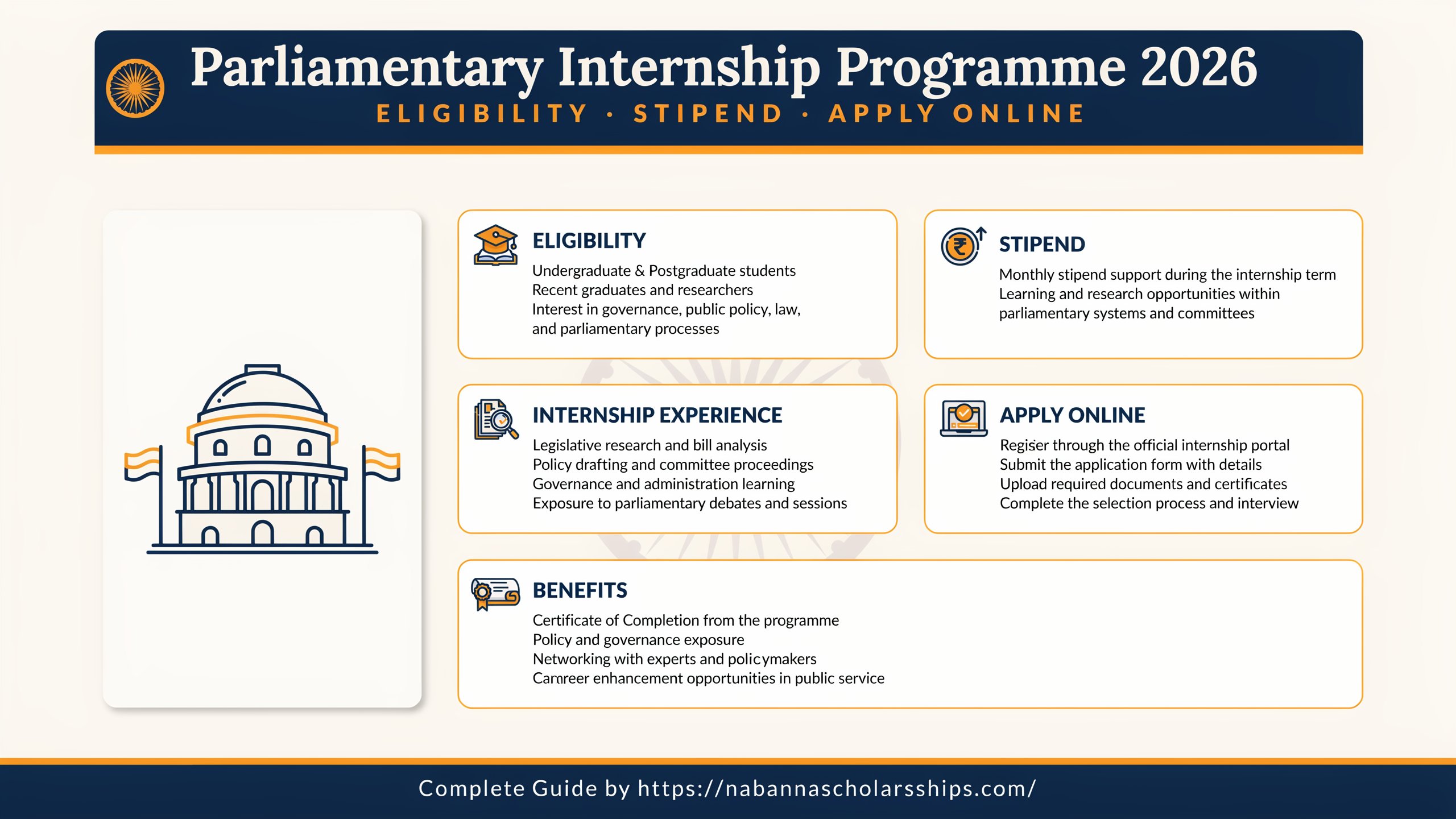
Looking to gain real exposure to parliamentary work and policy analysis? The Parliamentary Internship Programme 2026, offered by Kanimozhi Karunanidhi, Member of Parliament, gives postgraduate students a paid internship at her MP Office in Delhi for 3 to 6 months.
This guide covers eligibility criteria, stipend details, key benefits, and the complete application process, helping you understand everything needed before the application deadline on June 10, 2026.
Parliamentary Internship Programme 2026 – Overview
The Parliamentary Internship Programme 2026, led by Kanimozhi Karunanidhi, Member of Parliament, invites postgraduate students into her MP Office in Delhi for a paid internship of 3 to 6 months. From what I’ve seen of such offices, it’s real parliamentary work, not a formality.
Quick Highlights
- Open to second-year postgraduates in law, public policy, governance, or social sciences
- Focused on legislative research, policy analysis, and parliamentary work
- Needs solid public communication skills
- Apply with a resume, CV, cover letter, and research samples
- Forms accepted in Tamil or English
- Submit the online application via Google Form by June 10, 2026
Key Information at a Glance
| Aspect | Details |
| Core work | Parliamentary functioning, policy research, legislative processes |
| Focus areas | Policy issues, policy analysis, policy briefs, legislative tracking |
| Exposure | Parliamentary interventions, governance work, public administration |
| Outcome | Better grasp of decision-making and parliamentary discussions |
Parliamentary Internship Programme 2026 – Key Features
This internship is built around real exposure, not theory. Interns get involved in legislative learning, build connections within the parliamentary ecosystem, and receive guidance that shapes their understanding of governance and public administration.
Real-World Policy Exposure
- Direct involvement in policy issues and policy analysis
- Close view of legislative tracking and parliamentary interventions
- Exposure to governance work and public administration in practice
Parliamentary and Legislative Learning
Interns sit close to legislative processes and political research as they unfold, gaining a working sense of policy development and decision-making rather than just reading about it afterward.
Networking Opportunities
- Access to people working across public affairs and legislative affairs
- Exposure to professionals shaping parliamentary discussions
- Informal interaction during day-to-day parliamentary office work
Mentorship and Professional Development
Guidance comes through regular research assignments and feedback on real tasks, helping interns build a sense of how governance functions actually operate in practice.
Eligibility Criteria
The programme is meant for postgraduate candidates with a genuine interest in public policy, governance, and legislation, who bring some research aptitude and written communication to the table.
Educational Qualifications
- Postgraduate candidates, preferably in their second year
- Background in law, public policy, or social sciences
- Prior academic work involving research projects
Preferred Academic Backgrounds
| Field | Relevance |
| Law | Legislative affairs, governance issues |
| Public Policy | Policy discussions, political research |
| Social Sciences | Analytical thinking, academic backgrounds |
Age Requirements (If Applicable)
No specific age limit is mentioned; eligibility is based on academic standing rather than age, with postgraduate candidates from relevant parliamentary processes-related fields preferred.
Who Should Apply?
- Students with strong analytical thinking and writing samples ready
- Those with some previous experience in research or policy discussions
- Candidates comfortable with academic work tied to governance issues
Skills and Qualifications Preferred
Beyond academics, the office looks for practical skills — research skills, communication skills, and the ability to turn policy analysis into something usable. I’ve noticed offices like this value clarity over polish.
Research Skills
- Strong analytical abilities
- Comfort with parliamentary research
- Ability to handle research assignments independently
Communication and Writing Skills
English language proficiency matters here, since written inputs and professional writing form a big part of the daily output expected from interns.
Public Policy Interest
A genuine interest in public policy helps more than perfect grades — it shows up in how interns approach research samples and respond to real tasks.
Data Analysis and Critical Thinking
- Updated resume, CV, and cover letter showing relevant exposure
- Ability to interpret data accurately
- Critical thinking applied to real policy analysis
Roles and Responsibilities of Interns
Interns work closely with the parliamentary team, contributing to research, policy analysis, and legislative work that directly feeds into the MP’s day-to-day responsibilities.
Legislative Research
- Background research for legislative drafting
- Support on private member bills
- Input for parliamentary speeches
Policy Analysis
Interns prepare policy inputs and briefing notes, often working on zero hour questions and Rule 377 matters that need quick, accurate turnaround.
Content Drafting and Documentation
- Reports and background material
- Data compilation for ongoing projects
- Drafting support for policy briefs
Constituency and Outreach Support
Work often extends to constituency issues and outreach work, connecting public issues raised on the ground with government policies being discussed in parliament.
Event and Meeting Coordination
- Debate preparation support
- Coordination around parliamentary debates
- Assistance with social media and content creation during events
Key Learning Areas During the Internship
The internship builds understanding across public policy, governance frameworks, and legislative affairs, giving interns a grounded sense of how parliamentary procedures actually function.
Parliamentary Procedures
- Understanding of legislative processes
- Exposure to parliamentary offices in action
- Familiarity with political processes
Governance and Public Policy
| Area | What Interns Learn |
| Policy formulation | How ideas become proposals |
| Policy evaluation | Assessing impact and outcomes |
| Governance frameworks | Structures behind decision-making |
Political Communication
Interns learn policy communication firsthand — how complex policy ideas get simplified for public consumption without losing their substance.
Legislative Affairs
- Research methodology used in legislative work
- Evidence-based research practices
- Exposure to development studies relevant to policy
Skills You Will Develop
By the end, interns walk away with stronger policy research and professional writing abilities — skills that quietly carry over into almost any career path afterward.
Policy Research
- Stronger legislative research capability
- Sharper critical thinking and problem-solving
- Better report writing and policy drafting skills
Professional Writing
Interns improve at professional research writing through repeated practice — drafting briefing skills and presentation skills that hold up outside the internship too.
Leadership and Teamwork
Working within a team teaches interns how decisions get coordinated, building quiet confidence that’s useful in think tanks, research institutions, or any policy organisations later on.
Stakeholder Engagement
- Practice engaging with stakeholder engagement scenarios
- Exposure to public affairs consulting approaches
- Foundation for civil services preparation or legal practice later
Duration, Location and Stipend
The internship runs for 3 to 6 months, based in Delhi, with an in-office work mode that gives interns sustained exposure to real parliamentary work and policy-related work throughout the internship duration.
Internship Duration
- Flexible internship duration of 3 to 6 months
- Decided based on research assignments and ongoing policy projects
- Full-time, in-office commitment expected
Work Location
Interns work in-office at the MP Office in Delhi, allowing direct, sustained exposure to daily parliamentary work rather than remote involvement.
Stipend Details
This is a paid internship with a stipend provided for the full internship duration, reflecting the seriousness of the research assignments handed to interns.
Additional Benefits
- Real exposure to policy projects beyond classroom learning
- Sustained, in-office presence in a working parliamentary office
- Practical experience tied directly to ongoing policy-related work
Benefits of Joining the Parliamentary Internship Programme
Joining this programme means stepping straight into legislative research, policy analysis, and public affairs — the kind of exposure that’s hard to get through coursework alone.
Hands-On Government Experience
- Direct involvement in legislative affairs
- Real tasks within government relations and policymaking
- Close view of governance structures in daily use
Exposure to Policy Making
Interns get to watch policy formulation and legislative processes from the inside, building a sense of how governance actually moves from idea to action.
Career Advancement Opportunities
| Pathway | Relevance |
| Think tanks | Built on policy research exposure |
| Research organisations | Strengthened through legislative research |
| Civil services | Supported by public administration exposure |
| Legal research | Useful for those from a law background |
Internship Certificate and Recognition
Completion adds credible, verifiable experience in public policy and governance to a resume — recognition that carries weight for higher studies or professional careers later.
Who Should Consider This Internship?
This internship suits postgraduate students from a few specific academic backgrounds — those genuinely curious about governance, law, and policy processes, not just looking for a credential.
Political Science Students
Those studying governance and political processes gain firsthand exposure to parliamentary processes and policymaking they’d otherwise only read about.
Law Students
- Strong fit given focus on legislative affairs
- Useful exposure to legal research within a real office
- Practical grounding for policy consulting later
Public Policy Aspirants
Students aiming for public policy careers benefit most directly, since the work centers on policy discussions and parliamentary interventions from day one.
Journalism and Mass Communication Students
- Useful exposure to public communication
- Practical experience in policy discussions
- Insight into governance, valuable for political consulting later
How to Apply for Parliamentary Internship Programme 2026?
The application process is straightforward: complete the online application form with your academic background, research aptitude, and writing ability clearly presented.
Step-by-Step Application Process
- Fill out the online application form
- Attach your resume, CV, and cover letter
- Include research papers, articles, or writing samples
- Submit supporting documents before the application deadline
- Wait through the evaluation process
Required Documents
- Updated resume and CV
- Cover letter
- Research papers, articles, or policy briefs
- Writing samples relevant to public policy or governance
Application Tips to Improve Selection Chances
- Tailor your cover letter to legislative affairs or parliamentary affairs
- Highlight any research aptitude clearly
- Keep writing samples sharp and relevant to governance
Selection Process
Selection moves through a structured evaluation process, starting with screening and ending with a final decision based on fit and demonstrated ability.
Application Screening
- Initial review of resume, CV, and cover letter
- Assessment of academic background
- Check on writing samples submitted
Interview Process
Shortlisted candidates are typically evaluated on their understanding of public policy, governance, and legislative affairs, along with general communication ability.
Final Selection Criteria
| Criteria | What’s Assessed |
| Academic fit | Background in law, public policy, governance |
| Writing ability | Quality of writing samples |
| Research aptitude | Strength of research papers or articles |
Important Dates and Deadlines
Applicants should track the application timeline closely, since both the submission process and internship duration are tied to fixed dates.
Application Opening Date
The online application form opens ahead of the deadline, giving candidates time to prepare supporting materials properly.
Last Date to Apply
- Application deadline: 10 June 2026
- All supporting materials must be submitted by this date
- Late submissions are not part of the standard submission process
Internship Start Date
The internship duration of 3 to 6 months begins shortly after the application deadline, based in Delhi.
Career Opportunities After Completing the Internship
This experience opens doors across several fields tied to public policy, governance, and legislative research, depending on where an intern’s interests lie.
Public Policy Careers
- Roles in policymaking and governance structures
- Positions in policy consulting
- Opportunities in development sector work
Government and Administrative Roles
Exposure to public administration and legislative processes lays useful groundwork for civil services or other government relations roles.
Political Consulting Opportunities
Interns with strong legal research or legislative research backgrounds often move toward political consulting or work with NGOs focused on governance.
Research and Think Tank Careers
- Positions in think tanks
- Roles in research organisations
- Entry points for higher studies in public affairs
Why Parliamentary Internships Are Valuable for Students?
Beyond the resume line, this internship builds a real, working understanding of how democratic institutions actually function — something academic coursework alone rarely delivers.
Understanding Democratic Institutions
- Direct exposure to parliamentary processes
- Practical view of policy processes in motion
- Better grasp of governance beyond theory
Building Professional Networks
Working inside a parliamentary office naturally connects interns with people involved in policy discussions and parliamentary interventions, networks that often outlast the internship itself.
Developing Leadership Skills
Handling real responsibilities — even small ones — within legislative work builds quiet confidence, useful later whether the path leads to civil services preparation or political consulting.
Expert Tips for Getting Selected
A few practical habits make applications stand out more than polish alone — clarity, relevance, and genuine interest tend to matter most.
Build a Strong Resume
- Keep your resume and CV focused and relevant
- Highlight any law, public policy, or governance coursework
- Avoid generic templates; tailor content to legislative affairs
Highlight Relevant Experience
Mention any prior research projects, writing samples, or political research work clearly — even small academic projects count if relevant.
Demonstrate Interest in Public Policy
Show genuine engagement with policy discussions or governance issues in your cover letter, rather than restating your degree.
Prepare for Interviews
- Be ready to discuss legislative affairs confidently
- Show awareness of current policy discussions
- Speak clearly about your own research aptitude and interests
Conclusion
The Parliamentary Internship Programme 2026 offers postgraduate students a genuine, paid opportunity to work inside Kanimozhi Karunanidhi’s MP Office in Delhi for 3 to 6 months. It blends legislative research, policy analysis, and parliamentary work with real exposure to governance and public administration. For students from law, public policy, or social sciences backgrounds, it’s a practical step toward careers in policymaking, civil services, or research. Strong writing samples, research aptitude, and genuine interest matter more than perfect grades. Applications close on 10 June 2026, so early preparation pays off for serious applicants.
Frequently Asked Questions (FAQs)
What is the Parliamentary Internship Programme 2026?
It’s a paid internship under Kanimozhi Karunanidhi, Member of Parliament, focused on parliamentary work, policy analysis, and legislative research.
Who is eligible to apply for the internship?
Postgraduate students from law, public policy, governance, or social sciences backgrounds are eligible.
Is the Parliamentary Internship Programme paid?
Yes, it’s a paid internship with a stipend for the full duration.
What is the duration of the internship?
The internship runs for 3 to 6 months, based in Delhi.
Will interns receive a certificate?
Yes, interns receive recognition for completing the internship and contributing to parliamentary work.
Is the internship available for students from all academic backgrounds?
No, it’s preferred for postgraduate students from law, public policy, governance, or related fields.
What skills are most important for selection?
Strong research skills, written communication, and a genuine interest in public policy matter most.
Can recent graduates apply for the programme?
Yes, as long as they meet the postgraduate student eligibility criteria.
Is prior internship experience required?
No, but relevant academic work or research samples can strengthen an application.
How competitive is the Parliamentary Internship Programme?
Quite competitive, given limited seats and the demand among postgraduate students for parliamentary internship exposure.